Meet Athena: NASA's Most Powerful Supercomputer
NASA unveils Athena, its fastest and most energy-smart supercomputer yet. It packs massive power to push space science and AI further.
 Admin
Admin
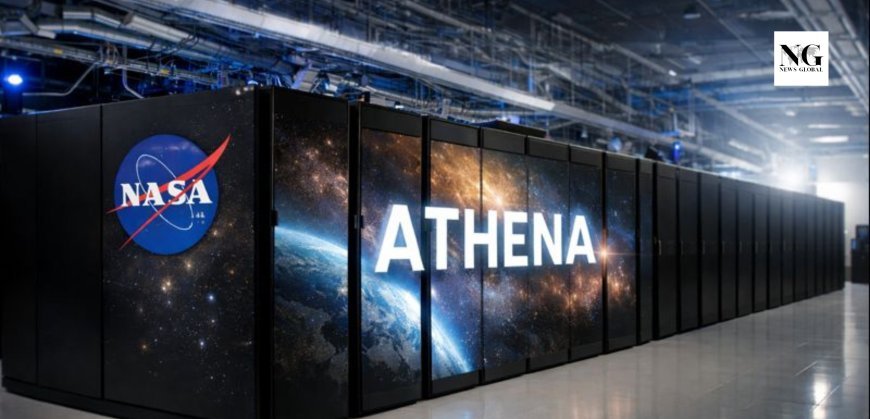
With over 10,000 nodes and a 63-petaflop peak on HPE Cray EX255n hardware, NASA's Athena stands ready to power missions across space, aeronautics, and science via unmatched speed and efficiency. Crushing toughest simulations keeps Artemis on track while pioneering aircraft designs and deep-space analytics.
Rocket Launch Simulations in Focus
Powering through rocket launch sims, Athena tackles fuel dynamics, brutal structural loads, and plume chaos in real-world atmospheres. It devours billions of data points to nail SLS stage splits and Artemis climbs, pinpointing vibrations and heat spikes that threaten lunar flyby crews. Teams refine hardware on these insights before hardware hits the pad, dodging million-dollar redesign disasters with Athena's razor-sharp stress maps.
Artemis Program Backbone
Artemis missions gain direct support through trajectory optimizations and heat shield modeling. Athena crunches descent profiles for human landers, accounting for lunar dust and gravity variations. Reentry simulations for Orion capsules cover abort scenarios and plasma flows at Mach 25 speeds. Gateway station designs benefit from habitat load calculations and radiation shielding tests. Every iteration runs faster on 264,144 cores, speeding up timelines for crewed landings.
Aeronautics Design Advancements
Next-generation aircraft designs push boundaries with large-scale fluid dynamics models. Athena simulates wing flows, sonic booms, and engine integration for quiet supersonic jets. Blended wing body concepts get detailed drag predictions across full flight envelopes. Hybrid-electric propulsion tests model battery thermal runaway and power distribution. Results feed into X-plane prototypes, cutting wind tunnel hours by orders of magnitude.
AI-Driven Astrophysics Analysis
Athena transforms astrophysics missions, channeling trained AI models to devour telescope data. It tackles petabytes from JWST and the Roman Space Telescope ahead. Exoplanet algorithms hunt biomarkers in atmospheres instantly. Black hole collision sims nail gravitational waves with elite grid detail. Plasma physics nails solar corona ejections, priming space weather defenses.
Earth Science and Climate Modeling
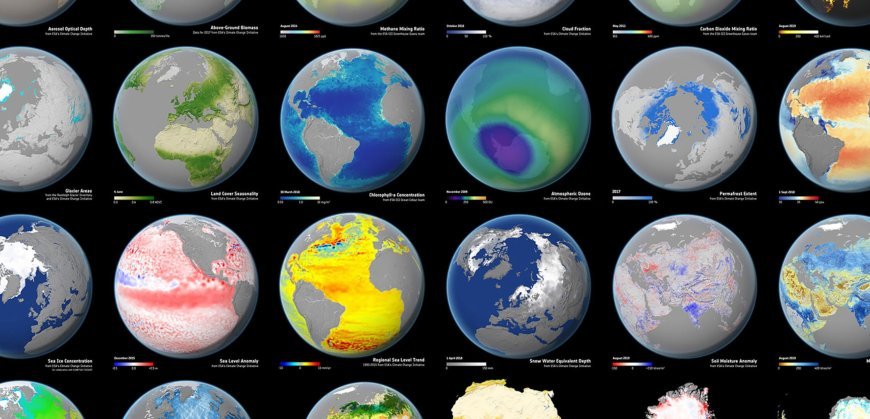
Athena's processing pipelines ingest continuous data streams from Earth science satellites. Global Precipitation Measurement mission feeds enable hurricane track forecasts via ensemble methods. SWOT satellite altimetry uncovers ocean circulation patterns for climate modeling. Wildfire predictions incorporate terrain, wind, and fuel variables. Radar fusion delivers meter-level accuracy for flood mapping in disaster response.
Space Weather Mission Support
Starting with Earth's magnetosphere, Athena's kinetic plasma simulations advance the Magnetospheric Multiscale mission, circling back to model particle interactions in geomagnetic storms, looping into solar flare predictions that protect satellites and grids from coronal mass ejections, extending to radiation belt dynamics for Van Allen Probes studies, and closing with real-time forecasts merging ground magnetometers and satellites.
Mars Exploration Preparations
Mars Sample Return mission planning uses Athena for n-body trajectory solutions. Phobos gravity assists get optimized for minimal delta-v budgets. Entry, descent, and landing profiles account for thin atmosphere variability. Rover autonomy algorithms train on regolith interaction datasets. Sample collection site selections factor terrain stability and resource mapping.
Supercomputer Specifications Deep Dive
Athena features four HPE Cray EX4000 racks containing 1,024 compute nodes, each with dual AMD EPYC Turin 128-core processors for 264,144 total cores and 786 TB of memory. Liquid cooling supports its 20.132-petaflop peak performance, managed by TriadOS via Altair PBS Professional, with Cray MPICH enabling inter-node communications.
Facility and Efficiency Features

Modular Supercomputing Facility at Ames Research Center houses Athena. Liquid cooling sustains high densities without thermal throttling. Power usage drops compared to air-cooled predecessors. Utility costs fall despite doubled performance. Beta testing wrapped in early January before full user release on January 14.
Name Origin and Team Selection
HECC staff chose Athena through a March 2025 contest. Greek goddess of wisdom links to Artemis program themes. Selection process involved workforce nominations and voting. Name reflects strategic mission support role. Rollout timing aligned with Artemis II preparations.
Future Hybrid Computing Roadmap
HECC portfolio blends supercomputers with commercial cloud resources. Athena serves baseline workloads with burst scaling to AWS or Azure. Mission teams select optimal environments per project phase. Investments target exascale readiness by 2030. Artemis lunar base simulations lead expansion priorities.
Conclusion
Check nas.nasa.gov/hecc for current proposal windows. Prepare detailed compute plans with benchmark results. Partner with NASA centers for stronger applications. Track Ames announcements for training webinars. Join the compute queue powering tomorrow's missions today.
FAQs
What exactly powers Athena's performance?
Athena runs on four HPE Cray EX4000 racks with 1,024 nodes. Each node uses dual 128-core AMD EPYC Turin processors for 264,144 total cores. Memory hits 786 TB while peak performance reaches 20.132 petaflops. Liquid cooling keeps everything stable during long runs.
How does Athena beat previous NASA supercomputers?
Athena tops Aitken's 13.12 petaflops and Pleiades' around 12 petaflops. Core count lands at 264,144 versus Aitken's 308,224 but with better efficiency per flop. Utility costs drop despite higher speeds thanks to advanced cooling and AMD chips.
Which missions rely on Athena most right now?
Artemis lunar programs lead with rocket sims, heat shield tests, and lander descents. Rocket launches model fuel dynamics and stage breaks for SLS flights. Aeronautics designs quiet supersonic jets and hybrid aircraft through massive CFD grids.
Can researchers outside NASA use Athena?
External partners on NASA-funded projects apply through the HECC portal. Proposals go in quarterly with peer reviews based on science impact. Approved users get core-hour allocations alongside NASA teams. Over 1,500 researchers tap in from universities and industry.
Where is Athena located and why there?
Ames Research Center in Silicon Valley houses Athena in the Modular Supercomputing Facility. The spot supports quick upgrades and ties into local tech talent. Liquid-cooled setup fits dense racks without power hogs.